
What is Career Development?
Career Development is what each of us needs to do to pursue employment goals and gain work throughout our life. It is a lifelong process of managing learning, work, and transitions that include both our personal and employment goals. While some people may want to secure ongoing work throughout their life, others may wish to pursue specific goals and work at activities that are incredibly satisfying or challenging.
The process of career development starts early as children explore different roles. It develops throughout school by engaging in education and skills training. Through formal career education programs, students learn about themselves, their values, aptitudes and interests so they can explore roles and industries to help them make informed career choices.
For each one of us our goals and journey will be different. We need to lean to make targeted written job applications, how to search for jobs and succeed at interviews. When we have these skills and capacities, we become more confident and are able to navigate and adapt to ever-changing labour markets.
Career development skills are for life. While everyone should have a good career education program at school and have opportunity to gain these skills and be supported to practice them, it is not the case for everyone. Career professionals are trained to provide this support including helping people to be ‘work ready’ and understand what is required by employers and workplaces.
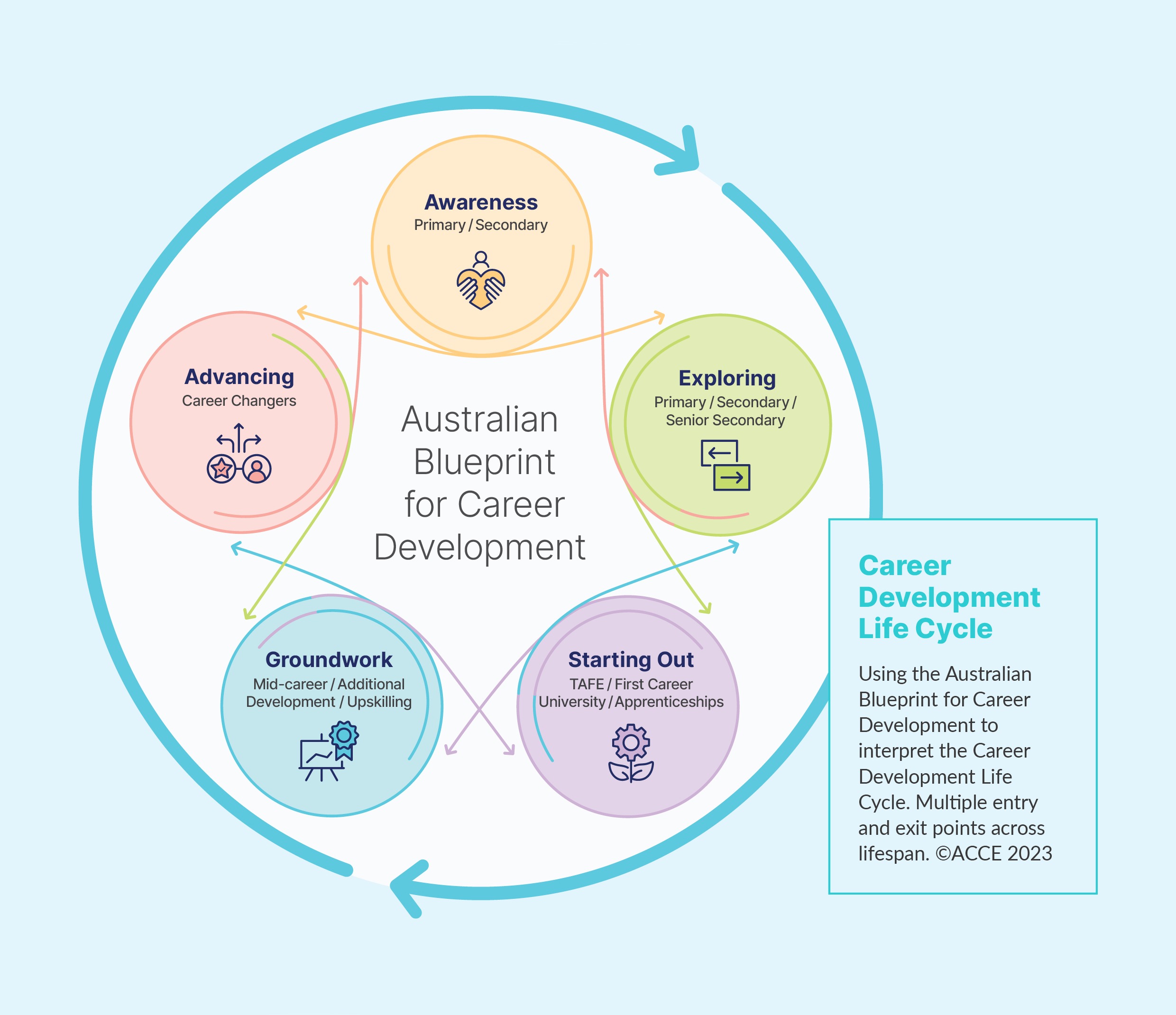
Read the Government’s Australian Blueprint for Career Development
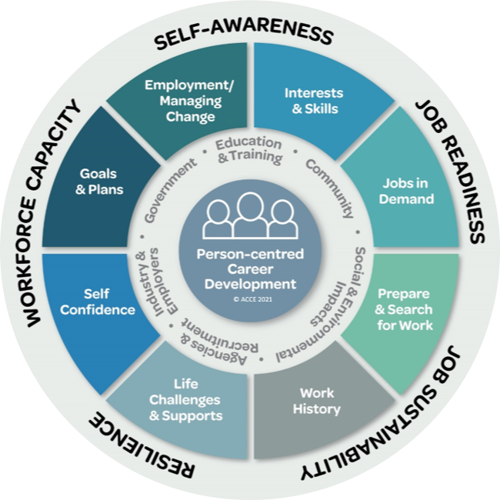
Our model of person-centred career development
Our Service Offering
Our services provides practical support to help you explore your options, increase your confidence, and transition to meaningful work or further education or skills training. Our approach focuses on helping you now and supporting you to sustain long-term career success.
- Work readiness assessment using proven vocational assessment tools.
- Identification of work barriers and targeted interventions.
- Goal setting, career planning and ongoing action management.
- Career exploration, including identification of interests, strengths and transferable skills.
- Understanding workplaces, industries and current labour market trends.
- Information about free and paid training and education, and how these link to career pathways.
- Resume and cover letter development.
- Interview preparation, role play training and interview feedback.
- Job search skills training, including networking and accessing the hidden job market.
- LinkedIn profile development and professional online presence.
- Understanding AI in recruitment and how to tailor applications effectively.
- Employability and workplace success skills.
- Outplacement and career change support.
- Educational transition support.
- Career planning and transitioning with a disability.
- Supporting your child’s career planning or transition from education.